Creative Sparks Enrichment Lab Sessions and Summer Camps
STEAM LEARNING
Coding. Robotics. Junior CEOs.
Each STEAM Learning session begins with Social Emotional Learning, using stories or scenarios to help children navigate emotions, empathy, and goal-setting. A specific soft skill is identified and woven throughout the session to reinforce the learning. Students tackle general and topic-related open-ended projects and “Impossible Challenges” that stretch their creativity — both individually and in teams — before concluding the session by presenting their work to the group.
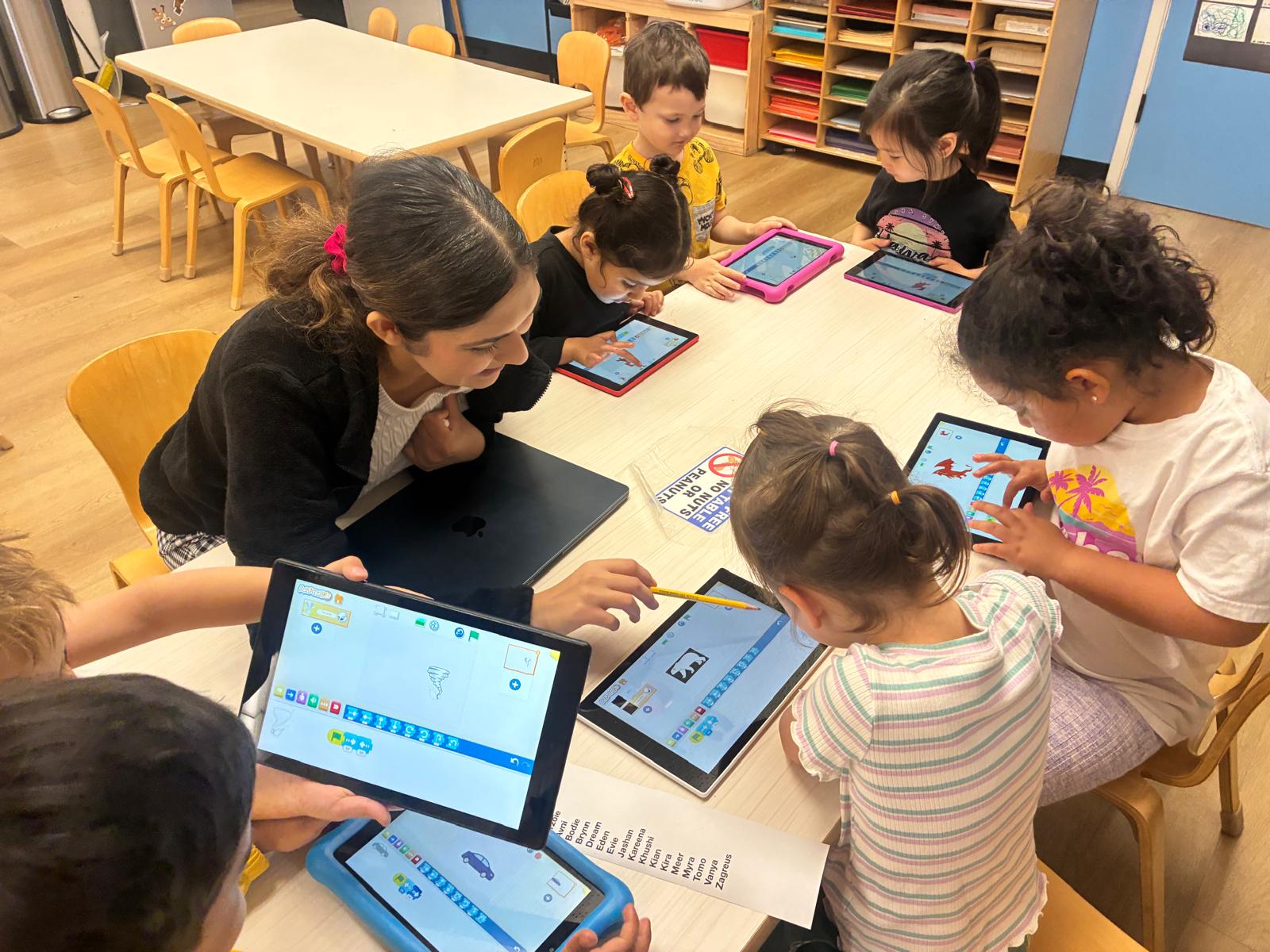
CODING: Spark early interest in your child | ||
| CODING Topics | Why It Matters | Focus |
| ScratchJr Coding (ages 5–7) | Builds knowledge concepts like Sequencing, casuality applicable everywhere. | Start unplugged to understand core concepts. Then use icon-based coding block for simple games. |
| Scratch Coding (ages 8–10) | Building computational thinking skills. | Uses text-based, vertical blocks. Includes complex concepts like variables, loops, logic, and sensors for more complex games. |
| Beginner Python (ages 8–10) | Builds computational thinking, logical reasoning, and problem-solving skills | Focus on basic syntax, print statements, variables, and simple loops using interactive, visual tools like Turtle graphics or Python-based block builders. |


ROBOTICS: Links passive play blocks to “live” creative builds | ||
| ROBOTICS Topics | Why It Matters | Focus |
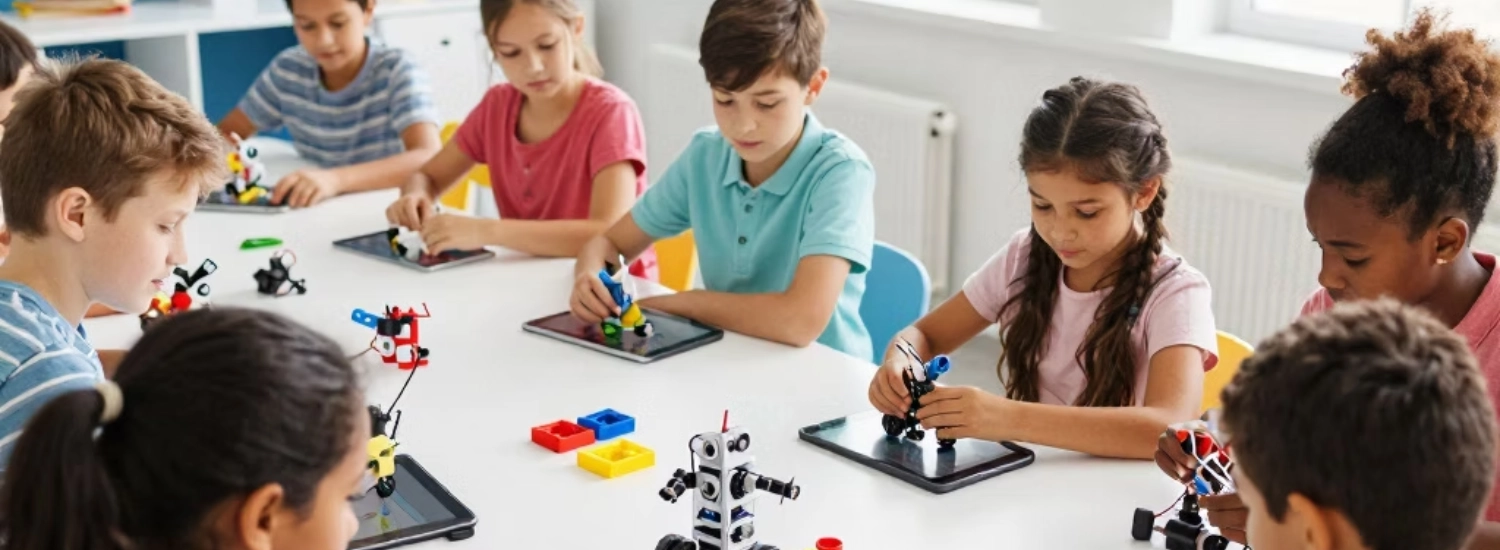
| Lego Robotics Early (ages 5–7) | Imaginative play to create early interest in engineering. | Basic mechanics and simple, visual block-based coding using LEGO Education Spike Essential gear, motor, and sensor projects. |
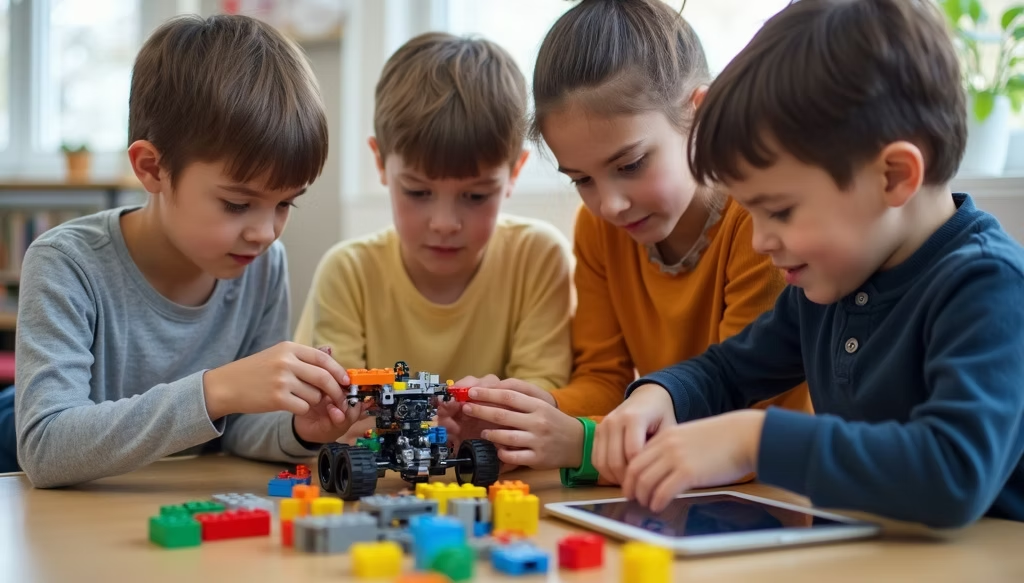
| Lego Robotics Intermediate (ages 8–10) | Builds technical and social resilience, critical thinking. | Introduces more complex sensors, structural engineering, and logic-based programming with Spike Prime. |
| Lego Robotics Advanced (ages 8–10) | Coding skills and critical thinking while building teamwork. | Involves building advanced robots, utilizing Python or advanced block coding, and participating in competitions like the FIRST LEGO League Challenge. |
JUNIOR CEOs: Ignite an interest in life’s possibilities | ||
| JUNIOR CEOs Topics | Why It Matters | Focus |
| Around the World (ages 5–7) (ages 8–10) | Builds empathy, respect, and global awareness for the world of the future. | Introduce and dive into a new country every week, exploring people, music, foods, holidays, etc. |
| Kid-preneur (ages 8–10) | Builds an entrepreneurial mindset for future success | Start small ventures like lemonade stands, craft sales, or pet-sitting to practice these skills in a real-world context. |
| Math “All Around Us” (ages 5–7) | Builds a strong, early foundation that predicts academic success. | Makes math a natural skill for life around us. |
| Money 101 (ages 8–10) | Builds essential life skills, early habits of responsibility | Introduces basic money literacy—earning, saving, and spending. |