Labs for 8 to 10 Year Old’s

TopicsWhy it MattersFocus
AI Creators
(Build, Design, Innovate)
Artificial Intelligence is transforming how people learn, create, and solve problems.

Students discover how AI works while learning to use it as a creative partner to design artwork, write stories, generate ideas, and build simple interactive projects.

Students explore age-appropriate AI tools through guided challenges that encourage experimentation, critical thinking, creativity. 

Scratch
(Creative Coding & Game Design)
Building computational thinking skills.Uses text-based, vertical blocks. Includes complex concepts like variables, loops, logic, and sensors for more complex games.
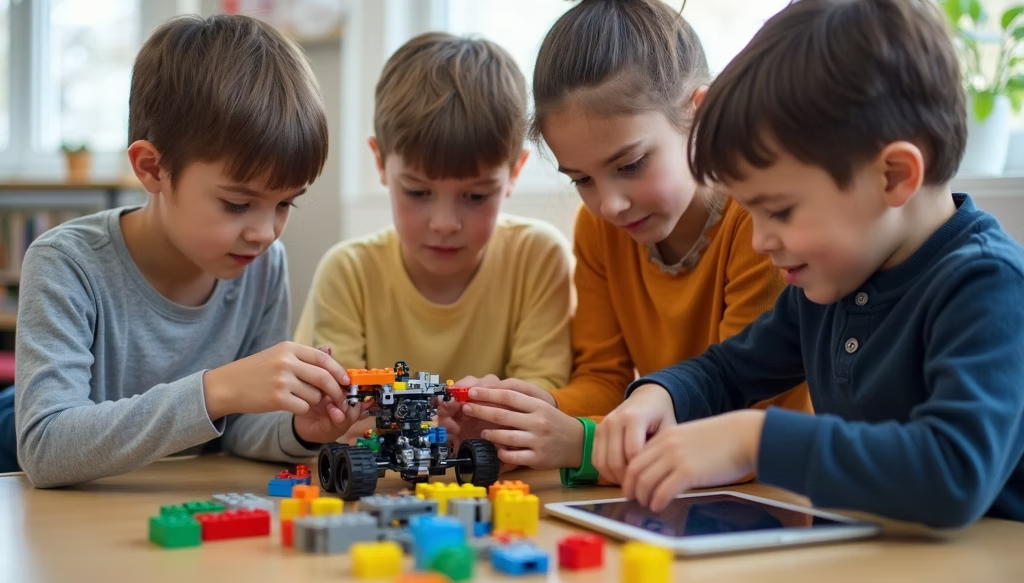
Lego Robotics-2 (Engineering & Code)Builds technical and social resilience, critical thinking. Coding skills and critical thinkingIntroduces more complex sensors, structural engineering, and logic-based programming with Spike Prime. Involves building advanced robots, utilizing Python or advanced block coding.
Python: Foundations (Learning the basics)Builds computational thinking, logical reasoning, and problem-solving skillsFocus on basic syntax, print statements, variables, and simple loops using interactive, visual tools like Turtle graphics or Python-based block builders.
Python: Projects/Game Coding
(Create Games)
Build on Scratch, Python Foundations to first steps into real programming.Learn text-based programming by building interactive challenges, games, and simple applications. Discover how code works behind the scenes, learn to debug their programs, and develop the confidence to think like programmers.
Junior CEO: Money 101
(Learning responsibility)
Builds essential life skills, early habits of responsibilityIntroduces basic money literacy—earning, saving, and spending.
Junior CEO: Kid-preneur
(Brainstorm & Create)
Builds an entrepreneurial mindset for future successPlan and start small ventures like lemonade stands, craft sales, or pet-sitting to practice these skills in a real-world context.
Junior CEO: Worldview
(Around the World)
Builds empathy, respect, and global awareness for the world of the future.Introduce and dive into a new country every week, exploring people, music, foods, holidays, etc.

Lab Descriptions

AI Creators
Ages 8-10

In this exciting project-based course, students discover how AI works while learning to use it as a creative partner to design artwork, write stories, generate ideas, and build simple interactive projects.

Students explore age-appropriate AI tools through guided challenges that encourage experimentation, critical thinking, and creativity. They learn how to write effective prompts, evaluate AI-generated responses, recognize when AI makes mistakes, and understand why human judgment, imagination, and responsibility remain essential.

Each class focuses on creating something new—from digital artwork and illustrated stories to games, inventions, and presentations—while introducing the foundations of AI literacy and responsible technology use in a fun and engaging environment.

Scratch Intermediate
Ages 8-10

Scratch is the world’s largest coding platform for children, designed to introduce kids ages 8 and up to the fundamentals of programming through creative expression. Instead of writing complex syntax, children snap together colorful coding blocks to create interactive stories, games, and animations.

In this unique lab, students move beyond simple tutorials to design and create their own original projects. They learn to think like game designers, animators, and storytellers — all while building computational thinking skills that translate across subjects.

Benefits include promoting computational thinking, breaking down complex problems, creativity for design, persistence for debugging, collaboration with peers, and confidence in representing their work.

RoboQuest LEGO Robotics-2
Intermediate/Advanced for Ages 8-10

Robotics Advanced builds on foundational robotics skills and introduces students to more complex design, building, and programming concepts. Using LEGO-based robotics systems, students explore how mechanical structures and coding work together to solve real-world challenges.
 
In this lab, students move beyond basic builds to design and program more advanced robots using sensors, logic, and structured problem-solving. They learn to test, refine, and improve their creations while working collaboratively in teams.
 
Benefits include strengthening engineering thinking, developing advanced problem-solving skills, understanding cause-and-effect through coding and sensors, building persistence through testing and iteration, and gaining confidence in designing and presenting their own robotic solutions.

Python: Foundations
Ages 8-10

Python is a natural next step after Scratch, introducing students to real coding in a simple and approachable way. Instead of using blocks, students begin writing short lines of code while still building on the same logical thinking they developed in Scratch.
 
In this lab, students transition from visual coding to typed programming by creating simple programs, interactive challenges, and beginner-friendly projects. They learn how to structure their ideas, understand how code works behind the scenes, and bring their logic to life.
 
Benefits include strengthening computational thinking, building problem-solving skills, developing persistence through debugging, understanding real coding concepts, and gaining confidence working with actual programming tools.

Python: Projects/Game Coding
Ages 8-10

Pre-requisite: Foundations Lab, or equivalent

Through fun, hands-on projects, children take their first steps into real programming with Python—one of the world’s most popular coding languages. Building on the logical thinking developed in Scratch, they learn to write simple code, solve problems, and create beginner-friendly programs in an engaging, supportive environment.

Students learn text-based programming by building interactive challenges, games, and simple applications. Along the way, they discover how code works behind the scenes, learn to debug their programs, and develop the confidence to think like real programmers.

Junior CEO: Money 101
Ages 8-10

Teaching kids basic money literacy — earning, saving, and spending — builds essential life skills by fostering early habits of responsibility, patience, and decision-making. Starting with simple concepts like piggy banks, allowances, and distinguishing between types of expenses prepares children for financial independence.

Key benefits include understanding needs vs. wants, developing “money sense,” avoiding debt, boosting confidence, and, over time, reducing future financial anxiety and promoting long-term financial independence. Helps in the Kid-preneur projects.

Junior CEO: Kid-preneur
Ages 8-10

Learning entrepreneurship helps young children develop essential life skills, including critical thinking, financial literacy, and resilience. It boosts confidence, fosters creativity, and teaches the value of hard work, independence, and managing failure. Early exposure prepares children to solve problems, understand money management, and cultivate an entrepreneurial mindset for future success.

Children will ideate small ventures in real-world context (like craft sales, pet-sitting, lemonade stand, etc), work as a team to plan the business model, and then together deliver a business venture. Exceptional ideas will be encouraged to consider filing for provisional patents, where we will advise the process as long as the parent supports it.

Junior CEO: Around the World
Ages 8-10

Learning about diverse countries helps children build empathy, respect, and global awareness, reducing prejudice by normalizing differences in appearance, food, and traditions. It enhances cognitive flexibility, sparks creativity, improves communication skills, and fosters a positive, inclusive worldview from a young age. Children learn to see themselves as part of a larger, interconnected world, which is crucial for becoming global citizens.

Key activities like exploring music, foods, and holidays from different countries can make these lessons engaging for young minds.